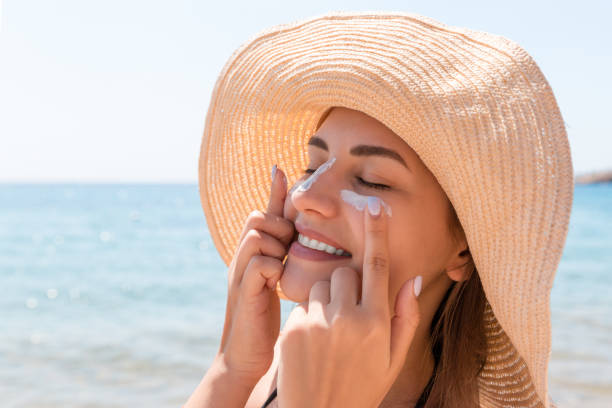
You’ve been there. After your skin has been washed, layered with skincare and apply sunscreen. But something is wrong. Instead of smoothing your skin, it suddenly becomes grainy and forms little “pills” in industry terms. This forces you to re-do your entire routine.
Sunscreen pilling is not only a problem, but it can also be a waste of products.
What is the Sunscreen Pill?
Anyone who has ever experienced sunscreen pilling is faced with the question: Is it me or the product? Our experts believe it could be both. It could be due to your product or how you apply it. Our experts have many ways to prevent sunscreen from piling and continue your daily routine.
Regularly exfoliate
A clean slate is the foundation of any good skincare routine. Exfoliation is a great way to eliminate dead skin cells and other debris. It also ensures maximum absorption of your skincare products. This reduces the chance of sunscreen pilling. Engelman said that finding the right balance for your skin is important. She explained that too much exfoliation could lead to skin becoming too dry and oily. This can also contribute to pimples. I recommend exercising only once to twice weekly and using chemical exfoliants instead of physical ones.
Evaluate the Products you Use
This article is too long to cover, but today’s beauty culture encourages people to use many products. This can cause certain products to work against one another and lead to skin damage. Engelman stated that too many products could disrupt the skin’s microbiome. This can cause irritation, dryness, and excessive oil production. This has a direct correlation to pilling. Your SPF could be affected if you apply too many products at once, especially oil-based creams or heavy creams.
De La Cruz suggests taking a hard look at your products and asking yourself if there is any benefit to using them. You can personalize your routine by switching products between days and deciding which products to use between AM and PM. This will allow you to spread the product love while reducing the risk of overusing or applying too many products, which can lead to sunburn.
Apply Products in the Right Order
How your products react to each other is determined by how you layer them. Engelman explained that serums and creams have lighter active ingredients with smaller molecular structures, while creams use larger molecules. The larger molecules can block the smaller molecules from getting into the skin. This could make your products useless and lead to skin cancer.
Engelman stated that she recommends starting with the simplest and most lightweight skincare products (like serums), then moving on to heavier or thicker products (like moisturizers), and finally applying SPF as the final step in your skincare regimen. De La Cruz agreed. De La Cruz agreed. Before applying makeup, sunscreen should be the last step in your skincare routine.
Before layering, let products air dry.
The product’s consistency, as well as your skin type, will determine how long it takes for a product dry or absorbs. Engelman and De La Cruz recommend waiting at least 30-60 seconds before applying any product. This will allow the product to dry completely. Engelman suggested that you can touch your face to determine if you are ready to move on to the next step in your skincare routine. It is not fully absorbed if you feel any product or wetness on your fingers.
Attention to Ingredients
Many ingredients react with other products to make pills.
- Silicones Engelman explained that silicons like dimethicone and amodimethicone are often included in sunscreens to improve their efficacy. They create a barrier on the skin’s surface to protect it from environmental stressors like water and wind. This can lead to clumping and pilling.
- Xanthan Gum De La Cruz also mentions xanthan gum, another possible pilling suspect. This multi-functional ingredient can be used in many products to improve its texture and feel. However, too high a concentration of it can cause pilling.
- Mineral Blockers De La Cruz stated that cream SPF formulas containing high amounts of minerals could cause pilling in some people. “Mineral SPFs are applied on the skin’s surface, unlike synthetic SPFs, which are absorbed into the skin. This can lead to an increased risk of skin irritation and pilling. De La Cruz recommends that mineral SPFs be made with “micronized” minerals.
To reduce the chance of sunscreen pilling if your SPF contains any of these ingredients, you can try patting the product onto your skin instead of rubbing it.
Explore New Products
Many ingredients may not be suitable for everyone. You might consider switching to another SPF if a particular ingredient isn’t compatible with your other skincare products. Our experts have compiled a list of sunscreen options that are very resistant to pilling.